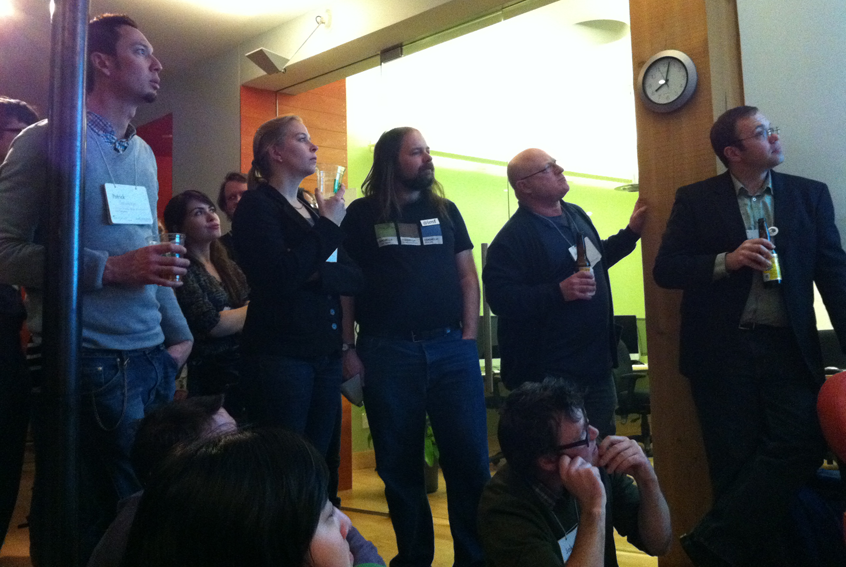
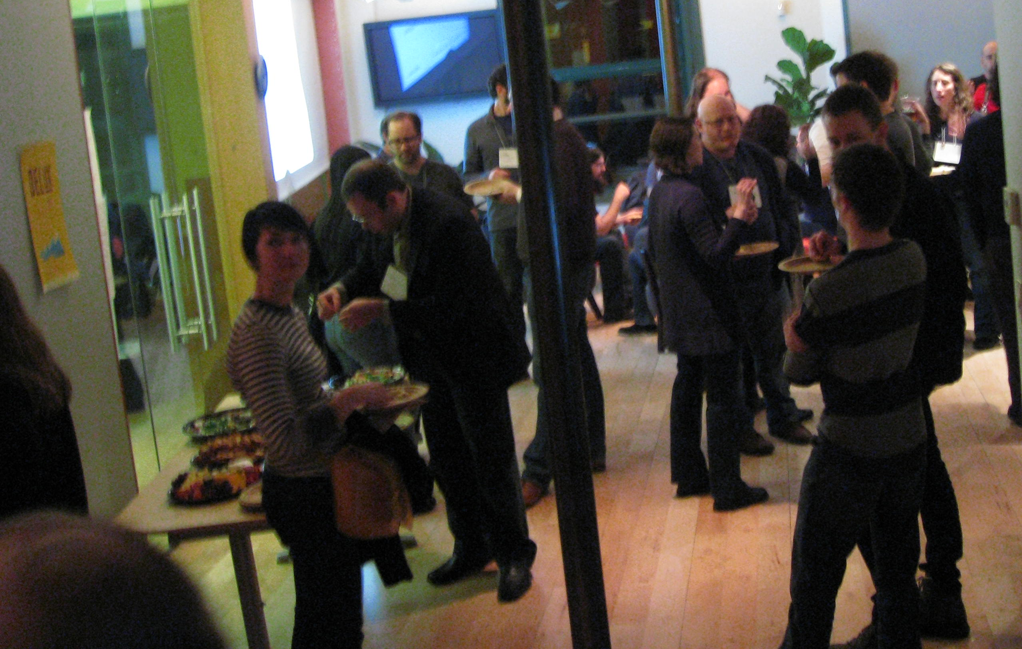
At the end of the December retreat in NYC, the Balanced Team group felt that it was time to reach out and share our thinking with a wider community. Last week’s Interaction 11 conference in Boulder, CO, provided an ideal opportunity to throw a party with activities and talks sprinkled on top.
With help from Hot Studio, Cooper, LUXR, SideReel and Atomic Object, about 70 people (thank you!) gathered at Pivotal Labs for BBQ, drinks, and an open discussion about how designers, engineers and product owners can collaborate better.
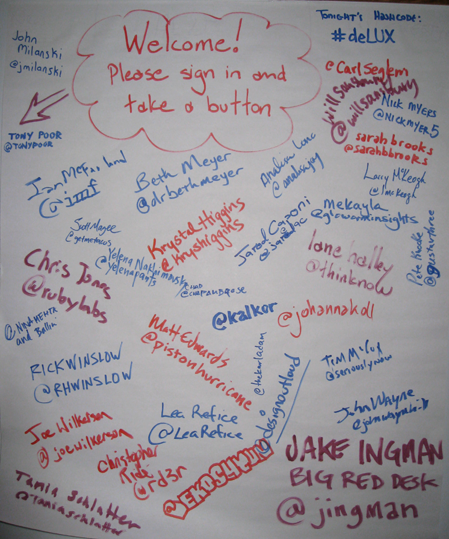 Great turnout!
The fishbowl format, an unmoderated, democratic panel discussion, was new to many of the attendees. The concept is simple:
- Pick a topic or question that everybody has an opinion on.
- Put four chairs in a central position. Only three people sit down and discuss, the fourth chair remains empty.
- Make sure that the discussion happens within the panel. If someone from the audience has a question or comment, she gets up and takes the empty chair. The person on the panel who has finished her point or has stayed on the longest leaves. Repeat.
- A good way to end a fishbowl is to discreetly remove the chairs.
For the deLUX fishbowl, we asked people what Lean UX means to them. What are the benefits for you in your work? What are the challenges? Attendees shared stories from in-house, freelance and consulting contexts, providing a hook for the conversations of the night.
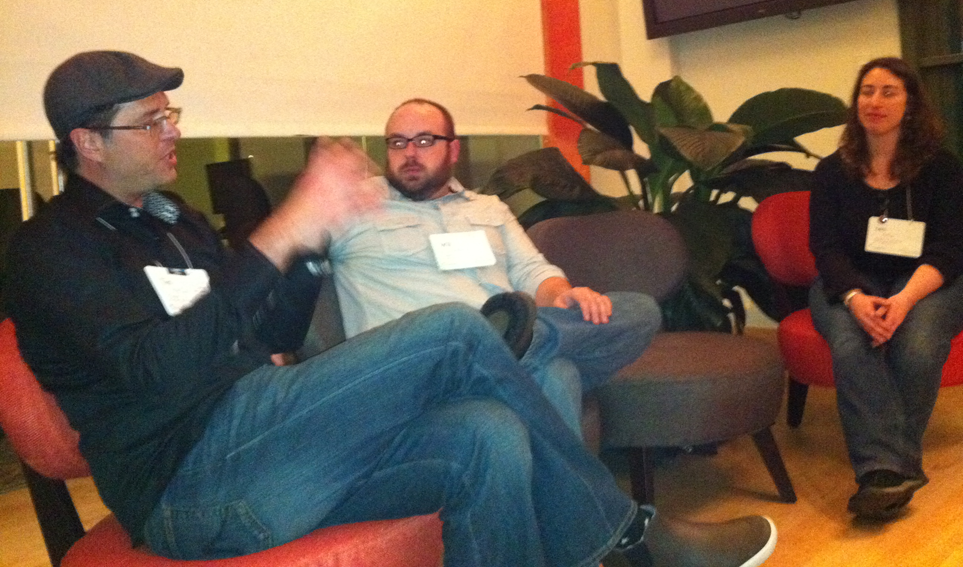 Tim McCoy, Will Sansbury and Lea Refice
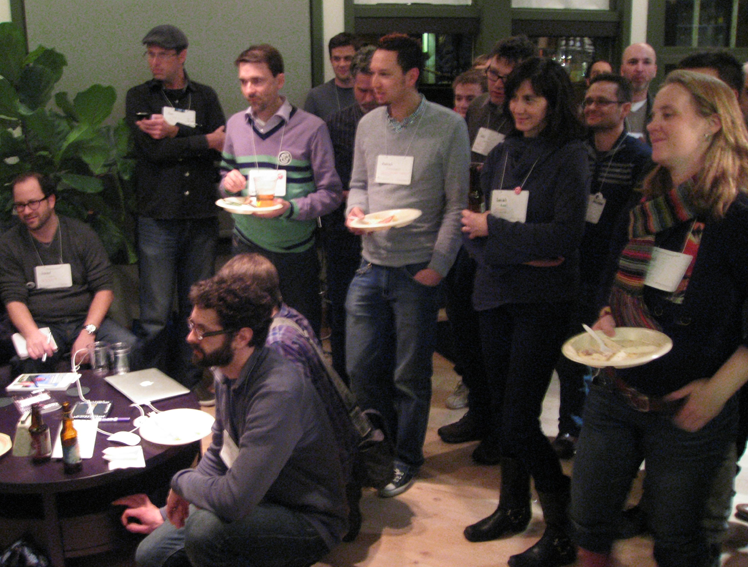 The audience, ready to jump in
In his short lightning talk, Hot Studio’s Chris Jones explored the concept of debt, comparing a waterfall, agile and lean approach. How do you know that this idea, concept or design will work? You need to find out as early as possible if something is worth doing: Think-Make-Check. A rapid cycle of design, code, release can be applied to design work, with early feedback, prototyping, and ‘just putting things in front of other people’. Get out of the house!
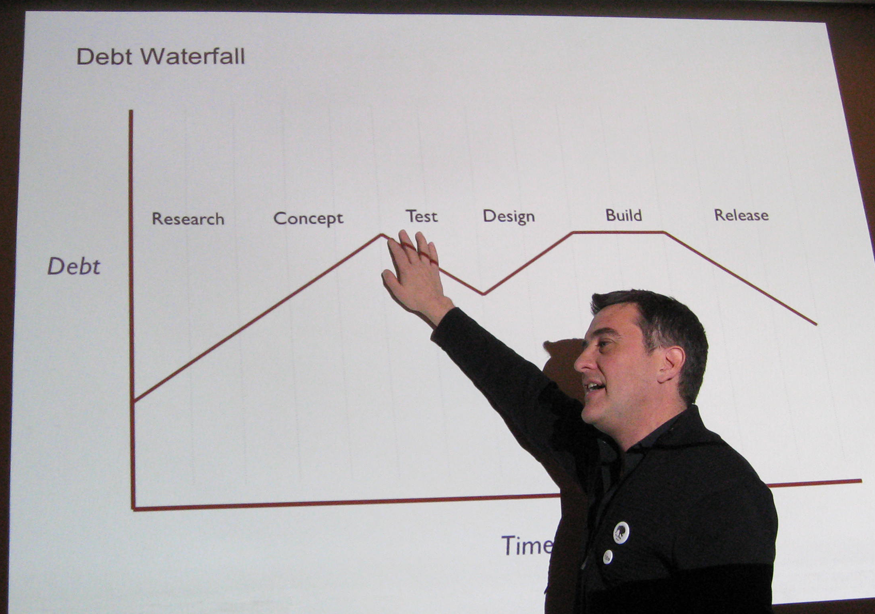 Chris Jones
Cooper’s Tim McCoy presented views on “Lean UX, Product Stewardship, and Integrated Teams.” Product Stewardship builds on the notion of a multi-skilled product owner team. The responsibilities of a product owner are demanding. To avoid a bottleneck situation, a product manager is joined by a UX strategist, who assumes the role of a product steward. While the product manager represents the business goals, the product steward focuses on users and customers. This can create tension - healthy tension, aiding prioritisation and decision-making. Tim has shared a longer post and his slides here.
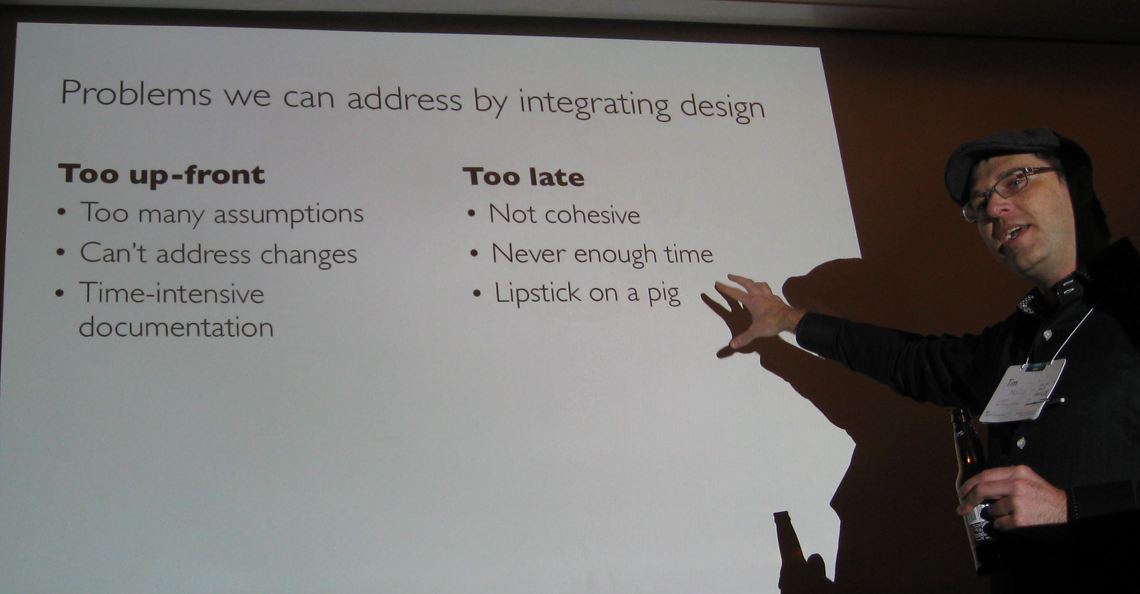 Tim McCoy
Powered by excellent food and a selection of different local beers, conversations continued until late. On Sunday, a small group got together for breakfast, over which we focused on one attendee sharing his story. I witnessed the magic of peer mentoring and am now keen to set up something similar in London.
The success of deLUX made it clear that there’s certainly a demand for opportunities to discuss collaboration and balanced teams. Finding someone in the same situation as you who has advice. The realisation that one’s team has come up with interesting practices that are worth sharing. Discussing one’s approach with developers who are surprised that there are designers who are passionate advocates of ’less ego’.
Let’s create more opportunities and get together again! We’ve already started planning a similar event for SXSW Interactive. We’re looking for hosts, sponsors, and attendees, so ping us if you can help, and keep an eye on the blog for updates.